Faith-based tours offer a rare opportunity to step outside the ordinary rhythm of daily life and into a world where history, culture, and spiritual growth converge in the most meaningful ways. Whether you are visiting ancient cathedrals in Europe, retracing the footsteps of Jesus through the Holy Land, or joining a Catholic pilgrimage travel group to the shrines of Italy, these journeys have a way of renewing the spirit and deepening your connection to something greater than yourself.
For travelers who want their trips to carry more meaning than a typical vacation, faith-centered group travel provides a community of like-minded companions, expert guides, and carefully planned itineraries that honor both the sacred and the cultural significance of each destination. These experiences are not just about seeing remarkable places; they are about being changed by them.
The Historical Roots of Pilgrimage Travel
Long before modern tourism existed, people were traveling great distances for spiritual reasons. The tradition of pilgrimage stretches back thousands of years across virtually every major world religion. Christians have journeyed to Jerusalem, Rome, and Santiago de Compostela for centuries. Catholics have made their way to Lourdes, Fatima, and Medjugorje seeking healing, grace, and a closer relationship with God.
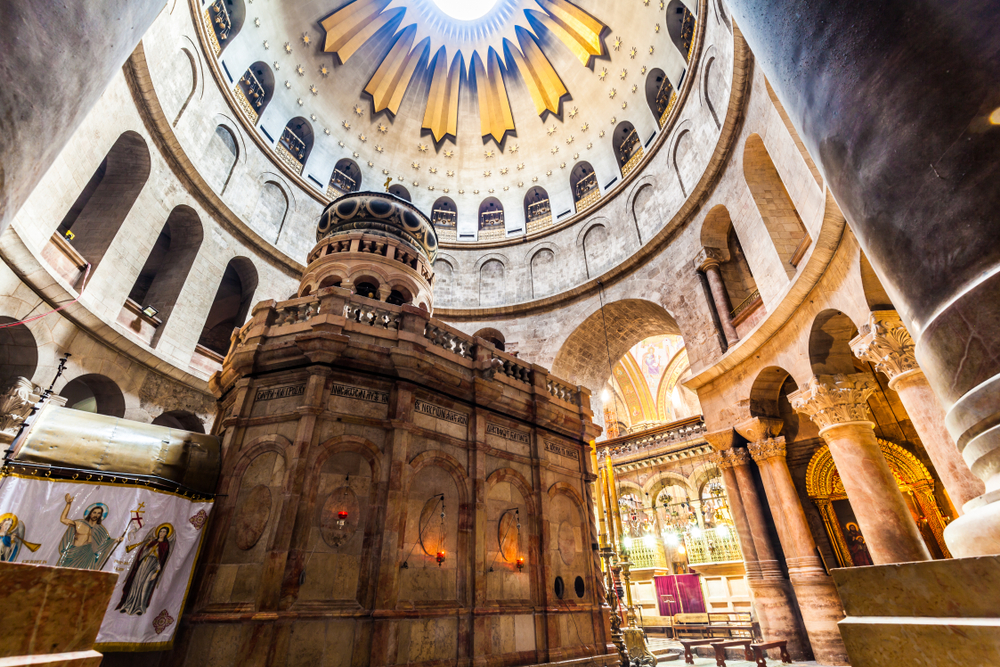
Understanding this history adds extraordinary depth to any faith-based tour. When you stand inside the Church of the Holy Sepulchre in Jerusalem, you are standing in a place where pilgrims have prayed since the fourth century. When you walk the Via Dolorosa, the winding path through the Old City where Jesus is believed to have carried the cross, you are participating in a tradition of devotion that spans generations. The stones beneath your feet carry centuries of prayer, and that weight is something no photograph can truly capture.
Religious tours in Europe offer a particularly rich tapestry of this historical layering. From the catacombs of Rome to the Gothic cathedrals of France, the continent is essentially a living museum of Christian faith and civilization. Every mosaic, every carved altar, and every stained-glass window tells a story that connects the modern believer to the earliest communities of the Church.
Spiritual Growth Through Sacred Spaces
One of the most profound aspects of Christian travel experiences is the way sacred spaces facilitate a kind of interior openness that is hard to achieve in everyday surroundings. There is a reason people describe visits to places like Assisi, Taize, or the Mount of Beatitudes as life-changing. These places carry a spiritual atmosphere that invites reflection, prayer, and a genuine encounter with God.
Faith-centered group travel creates the ideal conditions for this kind of growth. Traveling with a community of believers means you are never alone in your reflections. Shared prayer services at significant sites, group discussions about the theological and historical meaning of what you are witnessing, and the simple act of breaking bread together after a long day of walking and learning all contribute to a journey that nourishes the soul.
Spiritual directors often accompany faith-based tours, offering morning reflections, guided meditations, and the opportunity for personal conversation. For many travelers, these conversations become the most memorable part of the trip. Being far from home, surrounded by beauty and history, in the company of a thoughtful guide, creates a unique environment for honest questioning and genuine spiritual renewal.
Exploring Culture Alongside Faith
One of the great gifts of religious tours in Europe and the broader world is the way they immerse travelers in living cultures shaped by centuries of faith. The architecture, the art, the music, and even the food of many historically Christian regions are inseparable from the religious traditions that produced them.
In Spain, the Camino de Santiago winds through villages where local life still revolves around the rhythm of the Church calendar. In Portugal, the shrine at Fatima sits within a broader landscape of folk devotion and Marian culture that is woven into the national identity. In Italy, Catholic pilgrimage travel routes pass through towns where the local patron saint’s feast day is still celebrated with processions, music, and communal meals that have changed little over hundreds of years.
This cultural immersion enriches the spiritual experience in important ways. Faith does not exist in a vacuum; it is always expressed through particular communities, languages, and artistic traditions. When travelers engage with the culture surrounding a sacred site, they gain a more complete understanding of how that faith has been lived out across time and place. This perspective can challenge and expand one’s own practice of faith in surprising and meaningful ways.
Choosing the Right Faith-Based Tour for Your Journey
With so many options available, selecting the right faith-based tour requires some thoughtful discernment. Different tours serve different needs, and understanding your own intentions before you book will help ensure the experience aligns with what you are seeking.
Some travelers prioritize historical and cultural education, preferring itineraries that include expert lectures, museum visits, and in-depth explorations of archaeological sites. Others are drawn to contemplative experiences, seeking itineraries built around liturgical prayer, silent reflection, and visits to active monasteries or convents. Still others thrive in the energy of large Catholic pilgrimage travel gatherings, where the scale of communal devotion, such as the massive crowds at World Youth Day or the candlelight processions at Lourdes, becomes itself a powerful spiritual encounter.
Christian travel experiences also vary significantly in pace, cost, and theological emphasis. Some tours are organized by specific denominations and designed to reflect particular devotional traditions. Others are intentionally ecumenical, welcoming believers from across the Christian spectrum. Many reputable operators now offer customized itineraries for parish groups, school groups, and families, making faith-centered group travel accessible and personally tailored to the needs of the participants.
It is worth looking carefully at the qualifications of tour guides and spiritual directors, the balance of scheduled activities versus free time, and the kinds of accommodations offered. A truly excellent faith-based tour should feel like a pilgrimage, not just a sightseeing trip with a religious theme.
Planning Practically for a Spiritually Meaningful Trip
Good preparation is essential for getting the most out of any religious tour. Beyond the logistics of passports, packing, and travel insurance, spiritual preparation matters enormously. Many experienced pilgrimage travelers recommend beginning a practice of daily prayer or journaling in the weeks before departure, creating an interior readiness to receive whatever the journey has to offer.
Reading about the history and significance of the sites you will visit is also deeply worthwhile. The more you know about the Council of Nicaea before you visit a Byzantine basilica, or about the life of Saint Francis before you walk the hills of Umbria, the richer your experience will be. Many tour operators provide pre-trip reading lists and orientation materials precisely because informed travelers are more engaged and more moved by what they encounter.
Staying physically fit matters too, since many pilgrimage sites involve significant walking, climbing stairs, and navigating uneven terrain. Taking care of your body in the weeks before departure is itself a form of honoring the journey you are about to undertake.
Connecting with fellow travelers before the trip, through online forums, orientation gatherings, or group email threads, can help establish the bonds of community that will sustain and enrich the experience once you arrive.
Conclusion
Faith-based tours represent one of the most meaningful investments a person of faith can make in their spiritual life. By combining genuine historical education, rich cultural immersion, and intentional space for prayer and reflection, these journeys offer something that no ordinary vacation can provide. Whether you are drawn to religious tours in Europe, the ancient landscapes of the Holy Land, or the beloved shrines of Catholic pilgrimage travel tradition, the world is filled with places where heaven and earth seem to draw unusually close together. Traveling to those places, in community, with open eyes and an open heart, has the power to change you in ways that last long after you return home.
Need a Travel Planner Near You?
Here at Create Memories Thru Travel LLC, we are passionate about turning your travel dreams into unforgettable realities, and we’d love to help you start planning your next adventure! Whether you’re craving a meticulously curated packaged tour or a fully customized vacation tailored to your unique needs and desires, we’ve got you covered. Let us handle the details, from finding the perfect destinations to creating seamless itineraries, so you can focus on enjoying the journey. Reach out to us today and let’s start crafting the trip of a lifetime together!
There is a particular moment that seasoned travelers describe again and again. It happens somewhere remote, somewhere wild, somewhere that feels untouched by the ordinary rhythms of modern life. A researcher kneels beside a set of animal tracks in the Serengeti dust and explains, with genuine passion, exactly what story those impressions tell. The group gathered around is small, attentive, and fully present. Nobody is rushing to catch a bus. Nobody is waiting for a tour guide to finish reading from a laminated card. This is what National Geographic expeditions feel like in practice, and it is a fundamentally different experience from what most travelers encounter on conventional tours.
The travel industry has evolved considerably over the past two decades, but the gap between standard group tourism and true expedition travel has only widened. For people who want more than photographs of famous landmarks, who want to understand the places they visit at a deeper level, the distinction matters enormously. Understanding what separates these two approaches to seeing the world can help any traveler make a more informed and ultimately more rewarding choice.
What Makes National Geographic-Led Expeditions Different From Traditional Tours
The most immediate difference lies in who is leading the journey. Traditional tours are typically guided by professionals whose expertise is logistical: they know the schedules, the restaurants, the entry fees, and the best spots for group photos. National Geographic expeditions, by contrast, are led by certified experts in specific fields. These are biologists, archaeologists, geologists, photographers, and historians who have spent careers studying the very landscapes and ecosystems their groups are visiting.
This distinction shapes every single hour of the trip. When your guide is a marine biologist sailing through the Galapagos, the snorkeling excursion becomes a live lecture. When your expedition leader is a cultural anthropologist in Peru, a visit to a local village carries context that no guidebook can fully provide. The expertise is not decorative. It is the core of the experience, and it transforms passive sightseeing into something closer to genuine learning.
National Geographic expeditions also operate on a philosophy of purposeful travel. Every itinerary is designed not just to visit impressive places but to reveal them. The difference is subtle but profound. Visiting Machu Picchu as a stop on a standard tour and visiting it as part of an educational travel experience built around Incan civilization are two entirely different encounters with the same physical site.
Small Group Adventure Travel: Why Fewer People Means a Richer Experience
One of the most consistent findings among experienced travelers is that group size dramatically affects the quality of an experience. Small group adventure travel is not simply a marketing term. It reflects a genuine philosophy about how people learn, connect, and engage with unfamiliar environments.
National Geographic expeditions are deliberately kept intimate, typically capping groups at numbers that allow for real conversation, flexible movement, and meaningful interaction with local communities. A group of twelve people can stop spontaneously when a rare bird appears overhead. A group of fifty cannot. A small group can share a meal in a family home without overwhelming their hosts. A large tour group turns that same invitation into an imposition.
There is also a social dimension that smaller groups foster naturally. Travelers on these expeditions tend to be curious, well-read, and motivated by genuine interest rather than bucket-list accumulation. The conversations that happen over dinner on a ship in Antarctica or around a campfire in Botswana are often cited by past participants as among the most memorable parts of their trip. That quality of connection is almost impossible to engineer in large-group settings.
Wildlife Photography Tours: Capturing the Natural World With Professional Guidance
For travelers with a passion for photography, the opportunity to learn from working professionals while simultaneously visiting some of the planet’s most visually extraordinary environments is a compelling draw. Wildlife photography tours offered through National Geographic expeditions integrate instruction directly into the travel experience rather than treating it as an add-on.
Participants receive guidance on composition, lighting, patience, and technique from photographers who have worked in exactly these kinds of environments. More practically, they learn how to read animal behavior, how to position themselves ethically and effectively, and how to tell a visual story rather than simply document a moment. These skills stay with travelers long after the trip ends.
The destinations chosen for wildlife photography tours are selected not just for their scenic value but for their photographic potential across different times of day, seasons, and weather conditions. A wildlife photography tour through the American West will account for the golden hour light on canyon walls. An expedition to the Arctic will prepare participants for the challenges and rewards of photographing in long polar light. The result is a portfolio of images that reflects genuine skill development, not just proximity to impressive subjects.
Educational Travel Experiences: Learning That Lasts Beyond the Journey
There is growing recognition among researchers who study memory and personal development that experiential learning, the kind that happens in context, in real environments, with emotional engagement, produces far more durable knowledge than classroom instruction. Educational travel experiences are essentially designed around this principle, even when that design is not made explicit.
National Geographic expeditions take this seriously. Pre-trip materials give travelers a foundation in the ecology, history, and cultural context of their destination. On-site programming deepens and complicates that foundation through direct observation and expert commentary. Post-trip resources allow travelers to continue exploring what they encountered. The result is not a vacation that fades in memory but an experience that continues to generate insight for years afterward.
This commitment to education also extends to the expeditions’ relationship with local communities and conservation efforts. Many itineraries include visits to research stations, conservation projects, and community initiatives where travelers can see, firsthand, the complex work of protecting ecosystems and supporting sustainable livelihoods. This is not poverty tourism or superficial engagement. It is genuine witnessing of the challenges and progress that define the regions being visited.
Expedition Travel Planning: What to Expect Before You Go
Planning for an expedition is meaningfully different from booking a conventional vacation package. Expedition travel planning involves more preparation, more personal engagement, and more logistical nuance, but the effort pays dividends in experience quality.
First, the destinations themselves often require advance thought. Many National Geographic expedition routes visit protected areas, remote coastlines, or high-altitude environments where physical readiness matters. Travelers are given honest, detailed information about what each trip demands physically, and they are expected to take that guidance seriously. This is not about exclusivity. It is about safety and fairness to the entire group.
Second, packing and equipment requirements are more specific than for standard tours. A wildlife photography tour through the Amazon requires different gear than a polar expedition to Svalbard. National Geographic provides detailed packing guides, and expedition leaders are available in the planning phase to answer questions and help travelers make practical decisions.
Third, and perhaps most importantly, the mindset required for expedition travel is different from leisure tourism. These trips reward flexibility, curiosity, and a willingness to be surprised. Weather changes itineraries. Animal behavior is unpredictable. A morning plan can shift entirely because an extraordinary opportunity presents itself. Travelers who approach these trips with openness rather than rigidity consistently report higher satisfaction.
Conclusion
The case for National Geographic expeditions ultimately comes down to a simple question: what do you want travel to do for you? If the answer involves learning something real, connecting with people who share genuine curiosity, seeing wildlife in its actual context, and returning home with a perspective that has genuinely shifted, then expedition travel is not a luxury. It is the most efficient path to the kind of experience most travelers are actually searching for, even when they do not yet have the vocabulary to name it. The world is worth more than a checklist. These journeys are designed for people who know that.
Need a Travel Planner Near You?
Here at Create Memories Thru Travel LLC, we are passionate about turning your travel dreams into unforgettable realities, and we’d love to help you start planning your next adventure! Whether you’re craving a meticulously curated packaged tour or a fully customized vacation tailored to your unique needs and desires, we’ve got you covered. Let us handle the details, from finding the perfect destinations to creating seamless itineraries, so you can focus on enjoying the journey. Reach out to us today and let’s start crafting the trip of a lifetime together!